Dead Platforms Don't Lie: Why Designers Are Raiding the Internet's Graveyards for Inspiration
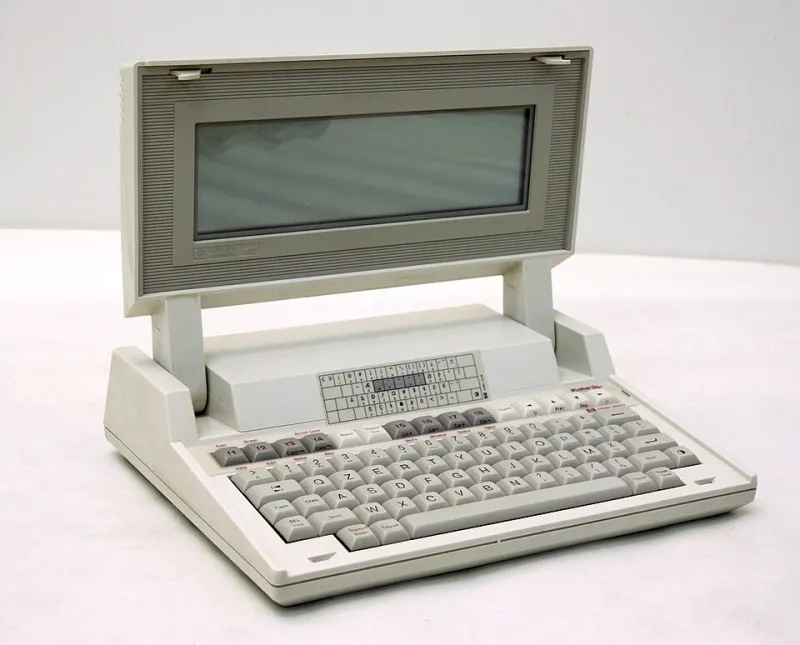
Photo: Hewlett-Packard (progettista/ costruttore), CC BY-SA 4.0, via Wikimedia Commons
There's something almost archaeological about the way certain corners of the internet operate right now. People aren't just nostalgic for old platforms — they're actively excavating them. Pulling out visual artifacts, interaction patterns, color palettes, and UI quirks that mainstream design culture moved on from years ago. And then repurposing all of it into something that feels weirdly, uncomfortably fresh.
Welcome to the aesthetic graveyard. Population: more active than you'd expect.
The Ruins Worth Digging Through
Let's start with Vine. Six seconds of looping video that somehow generated a more distinct visual grammar than most platforms manage in a decade. The compression artifacts, the slightly-off aspect ratios, the way creators learned to work with the loop as a compositional tool — all of that became a signature aesthetic that TikTok and Reels have been quietly borrowing from ever since. But the designers doing the most interesting work with Vine's legacy aren't the big platforms. They're motion artists and video collage makers operating in spaces most people never find, building loops that feel deliberately degraded, deliberately constrained.
Constraint, it turns out, is the whole point.
MySpace is another vein worth mining. Not the clean, late-era MySpace that tried to compete with Facebook, but the chaotic personal-profile era — the tiled backgrounds, the autoplay music, the nested HTML tables that nobody fully understood. That visual language has been resurrected inside places like Neocities, where a growing community of web designers is building personal sites that look like 2004 exploded in the best possible way. There's a whole sub-community of people creating what they call "maximalist web" — dense, layered, almost illegible pages that reject every principle of modern UX design. It's not irony, exactly. It's something more like reclamation.
Why Failure Has Aesthetic Value
Here's a question worth sitting with: why does a dead platform feel more visually interesting than a living one?
Part of it is selection bias. We remember the weirdest, most specific things about defunct platforms because the generic stuff faded away with the platform itself. What survives in cultural memory is the idiosyncratic — the corner cases, the user behaviors that nobody anticipated, the visual solutions people invented because the platform's design forced them to be creative.
But there's something deeper happening too. Living platforms are constantly optimized. Every visual element on Instagram or TikTok has been A/B tested into a kind of frictionless efficiency. Dead platforms weren't optimized to death. They have rough edges. They have decisions that were made for reasons that no longer exist. And those rough edges are exactly what designers are after right now, because rough edges are the only thing that still feels human.
Quora is an interesting case study here — not fully dead, but culturally abandoned by anyone who used to care about it. The platform's visual design is aggressively neutral, almost institutional. But the way certain communities used Quora, the specific rhetorical styles that developed in its answer format, the particular flavor of earnestness that defined its peak years — all of that has become source material for a kind of ironic sincerity that shows up in niche content communities. People are writing in "Quora voice" as an aesthetic choice.
The Remixers Operating in the Signal
The people doing the most interesting work with dead-platform aesthetics tend to operate in spaces that are themselves slightly off the grid. Tumblr, despite its diminished status, remains a genuine hub for this kind of archaeological design work. There are active blogs dedicated entirely to screenshotting and archiving UI elements from platforms that no longer exist, building what amounts to a visual library of digital failure.
Behance and Dribbble occasionally surface work in this vein, but the most radical experiments tend to live on more obscure platforms — itch.io game pages designed to look like GeoCities sites, Bandcamp artist profiles that deliberately replicate the aesthetic of forgotten music platforms like iMeem or Imeem. The people making this work aren't trying to go viral. That's almost definitionally not the point.
There's also a thriving community of digital artists using tools like Glitch, Bitsy, and RPG Maker to create work that deliberately channels the visual language of early web and gaming platforms — not as nostalgia, but as a formal choice. The pixelation, the color limitations, the interface conventions of platforms that no longer exist become a kind of visual vocabulary for talking about memory, obsolescence, and what it feels like to have grown up online.
Obsolescence as Resistance
There's a political dimension to this that doesn't always get named directly. When designers raid the aesthetic graveyard, they're often making an implicit argument against the dominant visual language of the present — which is to say, against the clean, minimalist, conversion-optimized design that Silicon Valley has spent two decades imposing on every surface of digital life.
Dead platforms didn't look like that. They looked like people — messy, specific, contradictory people who were figuring out how to exist in a new medium and hadn't been told yet what the rules were supposed to be. Pulling from that visual tradition is a way of insisting that the internet could look different than it currently does. That there were other paths. That the graveyard isn't just a record of failure — it's also a record of possibility.
The most interesting thing about aesthetic archaeology isn't what it tells us about the past. It's what it suggests about the future. Every defunct platform that gets excavated and remixed is a small argument that digital culture doesn't have to keep moving in the direction it's currently moving. That there are other signals worth tuning into, if you know where to look.
Vorrex exists somewhere in that frequency. So do the designers and artists who keep returning to the ruins. They're not mourning what's gone. They're building with the bones.