Digital Fossils: What the Dead Corners of the Internet Still Have to Teach Us
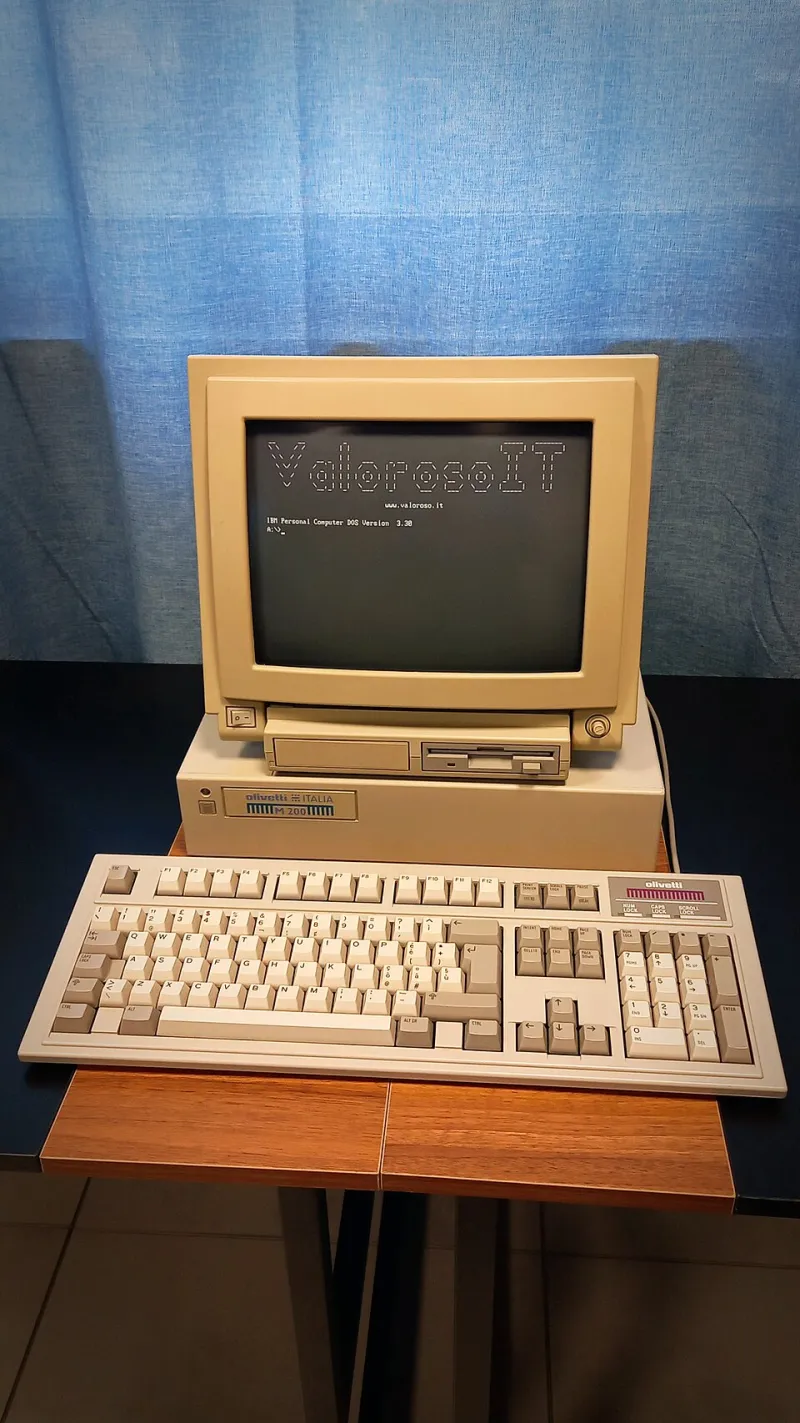
Photo: ValorosoIT, CC BY-SA 4.0, via Wikimedia Commons
Open the Wayback Machine. Type in a URL from 2003. Watch what loads.
If you grew up online, the sensation is something between nostalgia and vertigo — a kind of aesthetic whiplash that hits you before you've even consciously registered what you're looking at. Tiled backgrounds. Visitor counters. Forum signatures with animated flames. The entire visual vocabulary of a digital world that no longer exists, preserved in amber by a nonprofit server farm in San Francisco.
But here's the thing: those dead pages aren't just nostalgia fuel. To a growing community of digital archivists, visual historians, and obsessive internet anthropologists, they're primary sources. Evidence. Fossils of a cultural moment that shaped how millions of people first learned to communicate, perform identity, and build community — and that has been almost entirely written out of the official history of the web.
The Aesthetics of Scarcity
The visual languages of early internet culture were defined, more than anything else, by constraint. Slow connection speeds meant images had to be small. Limited hosting meant layouts had to be simple. Browser incompatibility meant designers had to make peace with unpredictability. And yet, out of these constraints came something genuinely expressive — a DIY visual culture that was chaotic and sincere in equal measure.
"There was no gap between the person and the page," says one digital archivist who has spent the better part of a decade cataloging defunct personal websites and early forum communities. "When someone built their corner of the internet in 1999, you could see their fingerprints on everything. The font choice, the background tile, the animated GIF in the corner — all of it was a direct expression of who they were. That's almost impossible now."
This is the central tension that runs through any serious engagement with dead internet aesthetics: the platforms that replaced the old web are infinitely more capable, but they've also smoothed away the idiosyncrasy. Instagram, Twitter, TikTok — they all impose a visual grammar that flattens individual expression into something legible to an algorithm. The old web was illegible by design. That illegibility was its identity.
Forum Culture and the Birth of the Visual Subculture
If you want to understand how internet communities actually developed their visual identities, you have to spend time in the forums — specifically, the ones that don't exist anymore.
PhpBB boards. Invision Power communities. Niche message boards built around specific bands, TV shows, gaming communities, and fandoms that have long since migrated or dissolved. These spaces developed extraordinarily specific visual cultures, often in direct conversation with (and opposition to) each other. The aesthetic choices weren't arbitrary — they were tribal markers.
A forum's color scheme, its avatar size limits, the particular style of signature graphics that were fashionable in its community — all of these communicated something about who belonged there and who didn't. Digital archivists who study this period describe it as a kind of visual semiotics that operated almost entirely below the surface of what participants were consciously aware of.
"People knew immediately whether they were in the right place," explains one researcher who focuses specifically on early 2000s music fan communities. "You didn't need to read a single post. The look of the board told you everything about the culture."
The Graveyard Subreddits
More recent, but no less haunting, are the abandoned subreddits — communities that flourished briefly and then collapsed, leaving behind thousands of posts, upvotes, and comment threads that now exist in a kind of digital purgatory. Locked. Archived. Occasionally visited by curious strangers.
These spaces are fascinating precisely because Reddit's visual uniformity means the content carries all the cultural weight. The memes, the in-jokes, the particular way members talked to each other — these become the aesthetic artifacts. And when a subreddit dies, it dies suddenly and completely. One week it's a living community; the next it's a museum exhibit.
Some of these communities left behind genuinely remarkable cultural artifacts. Experimental music subreddits that developed their own micro-genres through collaborative listening threads. Visual art communities that collectively evolved a distinct aesthetic over years of daily posts. Niche interest boards that served as the primary social infrastructure for thousands of people who had no other community.
The collapse of these spaces — whether through moderator burnout, platform policy changes, or simple entropy — represents a real cultural loss that rarely gets acknowledged. "We don't have a good framework for mourning digital communities," one archivist told me. "When a physical community space closes, there's a ritual for that. When a subreddit goes dark, it just... goes dark."
Reading the Design DNA
For those willing to do the work, the visual remnants of these dead communities contain a surprisingly readable history. Certain design choices cluster around specific moments in internet time — the particular shade of purple that was everywhere in early emo fan communities, the specific type of animated banner that signaled a serious gaming forum circa 2006, the layout conventions that marked a space as belonging to a particular subculture.
Learning to read this design DNA is, in a sense, learning to read a visual dialect. It requires familiarity with the technical constraints of each era, the aesthetic influences that were circulating at the time, and the specific subcultural references that communities were drawing on. It's slow work, and it rarely produces the kind of clean narrative that cultural historians prefer. But it reveals something important about how identity actually gets constructed online — not through explicit statement, but through accumulated aesthetic choice.
Why Any of This Matters
The easy answer is that it matters for the same reason all cultural history matters — because understanding where we came from helps us understand where we are. The visual languages of the current internet didn't emerge from nowhere. They evolved from, and in reaction to, everything that came before. The stark minimalism of modern app design is partly a response to the visual chaos of the early web. The algorithmic homogeneity of social media feeds is a direct consequence of the lessons platforms learned from watching more expressive communities fragment and fail.
But there's a less comfortable answer too. The dead corners of the internet represent a vision of online community that was genuinely different from what we have now — messier, more personal, harder to monetize, and in some ways more human. Studying those fossils isn't just archaeology. It's a reminder that the internet we have isn't the only internet that was possible.
Somewhere in the Wayback Machine, a visitor counter just ticked over. Nobody was there to see it.