One Link, No Firehose: The Quiet Rise of Daily-Drop Curators
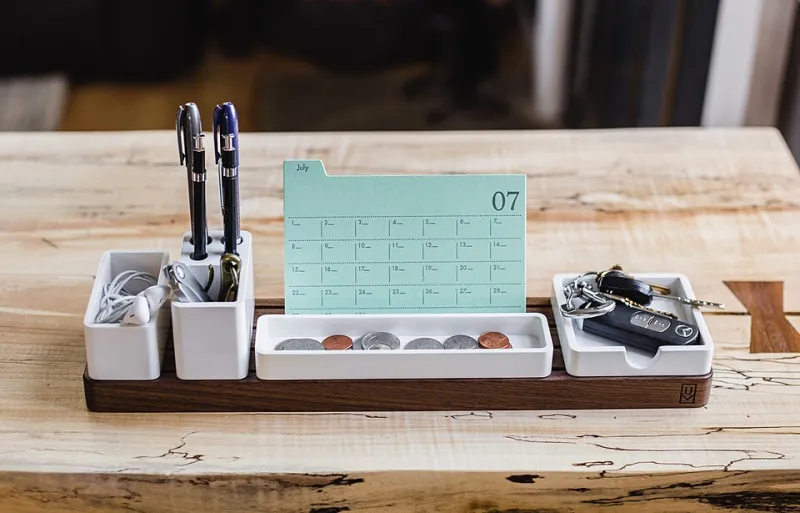
Photo: Jeff Sheldon ugmonk, CC0, via Wikimedia Commons
The first thing you notice about a good daily link is how little there is to notice. No thumbnail grid. No related posts. No comment section bubbling with takes. Just a URL, a few sentences of context, and a sign-off. Maybe a date. That is the entire product.
In 2026, that restraint is the point. A growing number of curators are running what might be called daily-drop projects: one handpicked link delivered once a day by email, SMS, or a bare-bones webpage. Some are free. Some cost a few dollars a month. Almost all of them are small. And almost all of them are explicitly positioned against the feed.
The Anti-Feed
Feed logic is volume. Post more, publish faster, stay in the stream. The daily drop inverts that. One link a day means the curator has to choose. Choosing means leaving things out. Leaving things out means the link carries weight.
That weight is the format's main feature. A thousand posts can blur into a texture. One link can land. If it is good, you remember where you were when you opened it. If it is bad, you remember that too. The stakes are tiny and real at the same time.
The curators I spoke to describe the job in editorial terms, not influencer terms. They are not building a personal brand. They are running a filter. Some are anonymous. Some use a first name and nothing else. One runs a text-only page that looks like a terminal readout. Another sends a single iMessage to a list of 40 friends every morning at 7:15.
The Economics of One
The money is not the point, but it is not irrelevant. Most daily-drop projects run on subscriptions in the $3 to $7 per month range. Some have free tiers and paid archives. A few take sponsorships, usually from small businesses that the curator already uses. The common rule is no pay-to-play. The link has to be good before anyone pays for it to be there.
The costs are low. Email is cheap. A static page is cheaper. SMS has real per-message costs, which is why text-based drops tend to stay small. The ceiling is built in: there are only so many people who will pay for one link a day, and there are only so many links a curator can honestly stand behind.
That ceiling is a feature. A curator with 2,000 readers at $5 a month is grossing $10,000 a month before fees and taxes. That is a real income, but it is not a venture-scale business. Most projects are much smaller — a few hundred readers, a few hundred dollars. The model rewards consistency and taste, not growth hacking.
The Ethics of the Single Link
A single link concentrates power. One curator can make a small site's week. One curator can also ignore a small site forever. The format is a human filter, and every human filter has a bias.
The better projects are transparent about it. They publish a short ethics page: why this link, what counts as a conflict, whether affiliate links are used, how corrections work. Some refuse sponsorships entirely. Some disclose when a link comes from a friend. Others do not, and you can feel it.
The harder question is who gets picked. Scarcity always creates an in-group. A daily drop can become a kingmaker for a tiny kingdom. That is not necessarily bad — curation is allowed to have a point of view — but it is worth naming. The alternative is not neutrality. The alternative is a different set of invisible choices.
The Intimacy Problem
One link a day feels like a note from a friend. That is the format's charm and its risk. Intimacy can be genuine, and intimacy can be manufactured. A curator who cultivates mystery is still cultivating a relationship, and relationships can become parasocial fast.
The best projects resist that. They keep the voice plain. They do not pretend to be your best friend. They tell you what the link is and why it mattered to them, and then they stop. The stopping is important. A daily drop has an end. You cannot doomscroll a single link. You can only decide whether to open it.
That decision is the quiet pleasure of the format. It gives the morning a shape. It gives the archive a memory. It makes curation legible in a way that feeds rarely are. The link is not content. It is a recommendation with a return address.
What Scarcity Actually Solves
Radical scarcity does not fix the internet. It fixes the morning. It creates a stopping point in a culture that has engineered stopping points out. It rewards small sites with a single burst of attention instead of a demand for constant output.
The risk is that the format gets copied and flattened. A daily drop becomes a growth tactic. A single link becomes a branded newsletter with a referral program. The scarcity becomes a gimmick. That will happen to some projects. It always does.
The ones worth keeping will stay small on purpose. They will keep the list short. They will keep the link singular. They will understand that one good link can feel louder than a thousand posts, not because it is louder, but because it is chosen.